+1
951 344 5221
 +44
20 8434 3923


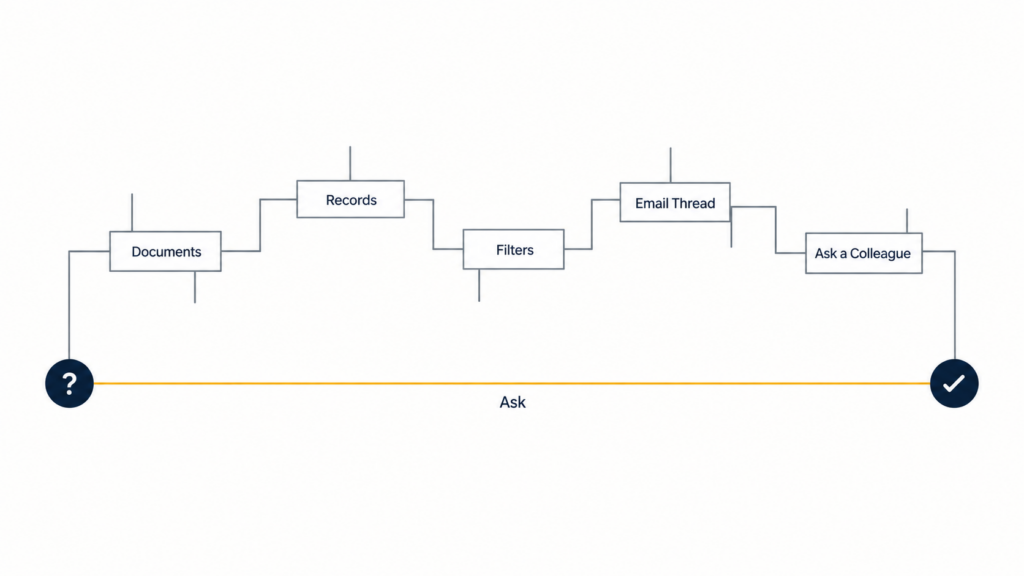
Think about how much of a quality professional’s day is spent looking for something. Which procedure covers this situation? Who is the current approver on that document? Where did that audit finding end up? What does this status actually mean? None of these questions is difficult. All of them take time, and the time adds up.
AI assistants are starting to change that. Not by replacing the judgment quality work depends on, but by shortening the distance between a question and a useful answer.
The Hidden Cost of Searching
Quality systems hold a great deal of information: documents, records, assignments, notifications, and years of history. The value of that information depends on how quickly someone can reach it. In practice, finding things often means navigating several modules, remembering which filter to use, or asking a colleague who happens to know. New team members take longer to get oriented. Occasional users, such as employees who only open the system to complete training or acknowledge a document, can struggle to remember how it works between visits.
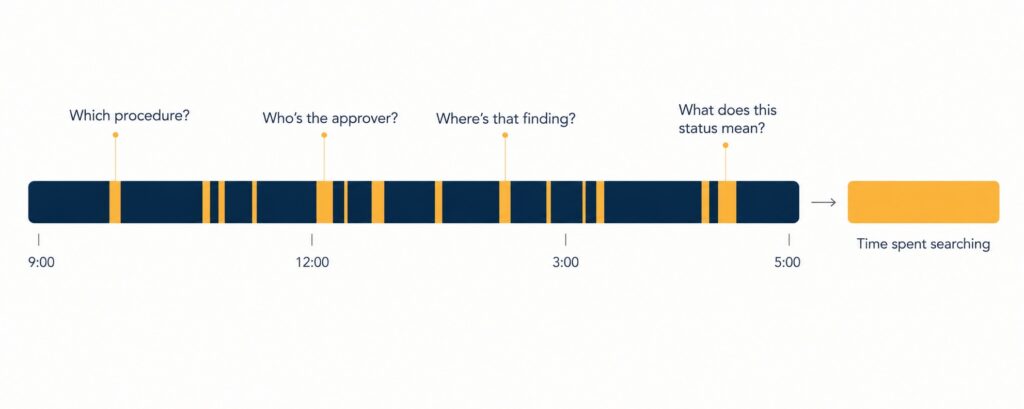
None of this shows up as a line item, but it slows everyday work, and it is exactly the kind of friction an assistant is well suited to remove.
Three Everyday Jobs an Assistant Can Take On
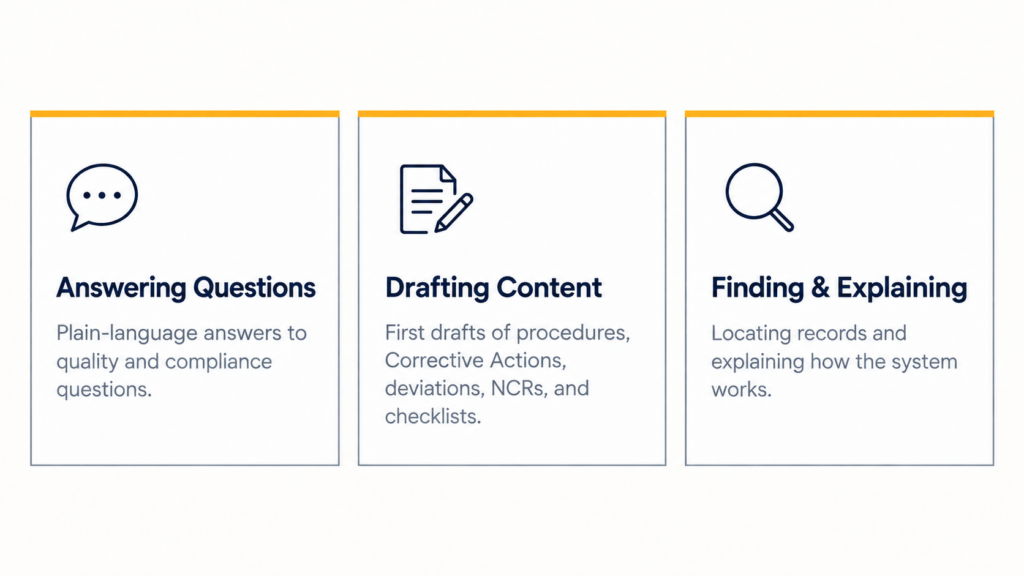
Answering questions. Quality and compliance questions come up constantly: how a requirement is typically interpreted, what a term means, what a process generally expects. An assistant that can answer in plain language gives people a starting point without sending them to a search engine or an email thread.
Drafting content. Quality work involves a lot of structured writing, including procedures, corrective action descriptions, deviation write-ups, nonconformance reports, and audit checklists. An assistant can produce a first draft so the person responsible can spend their effort reviewing and refining instead of starting from a blank page.
Finding and explaining. Beyond general questions, there is the matter of the system itself and the records inside it. Where is this record? What tasks are assigned to me? What does this field do, or why can’t I see that option? An assistant that understands the system can explain it and, where permitted, help locate the information.
Why Control Matters in a Quality System
Quality data is evidence, and quality decisions carry accountability. That is why the question is not only what an assistant can do, but how much control the organization has over it.
Different organizations will answer that differently. Some will welcome an assistant that can see live records. Others will want one that answers questions and helps with drafting but never touches their data. Some will want certain roles to have access and others not. A flexible assistant respects those boundaries instead of forcing an all-or-nothing choice.
It also helps to treat AI output the way a quality team treats any draft: as a starting point that a qualified person reviews before it becomes part of the record. Assistants speed up the work. They do not replace ownership of it.
Meet Trackmedium AI
Trackmedium AI is built around those principles. It supports users in three ways: as a quality expert that answers QMS and compliance questions and helps draft procedures, corrective actions, deviations, NCRs, and audit checklists; as a Trackmedium expert that explains workflows, statuses, fields, and permissions in plain language, grounded in Trackmedium help content; and, when enabled, as a data assistant that can find records and documents, summarize what is on screen, and check tasks and assignments.
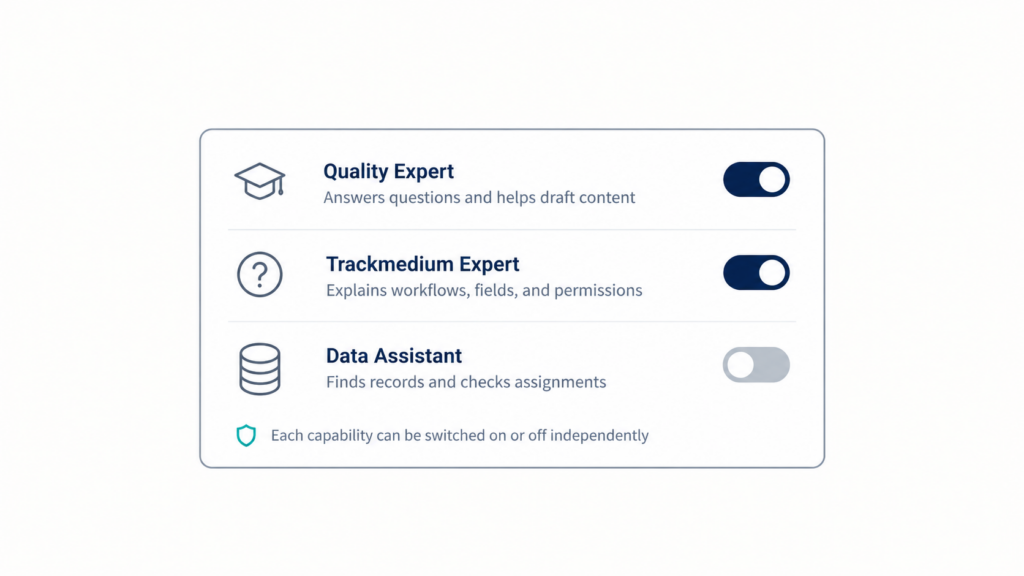
Each of these capabilities can be switched on or off independently, and AI can be enabled, limited, or disabled across the organization based on roles, policies, and compliance requirements. Organizations that prefer not to expose live records can turn off data access and still use Trackmedium AI as a quality and Trackmedium expert.
The result is an assistant that works where the team already works, without asking the organization to give up control to get the convenience.
Quality teams will keep asking questions all day. The difference is how long it takes to get a useful answer, and how much control the organization keeps along the way.
If you would like to see how Trackmedium AI helps your team get answers faster, request a Trackmedium eQMS demo to see it in action.
All images in this post, including the header image, were AI-generated.