
 +1
951 344 5221
 +44
20 8434 3923


Most food safety teams do not have a Hazard Analysis and Critical Control Points (HACCP) problem. They have a paperwork problem that looks like a HACCP problem.
The plan itself is usually sound. A trained team worked through the seven principles, identified the hazards, set the critical control points and agreed the limits. The trouble starts the week after sign-off. Monitoring records go into one binder, verification into another, and corrective actions end up in someone’s inbox. Six months later an auditor asks a simple question: show me what happened the last time this CCP went out of limits. The answer takes an afternoon to assemble.
That gap between the plan as written and the plan as run is what HACCP software is for. Below is what a system should actually hold, where the value really sits, and what it will not do for you.
Why a HACCP plan on paper drifts
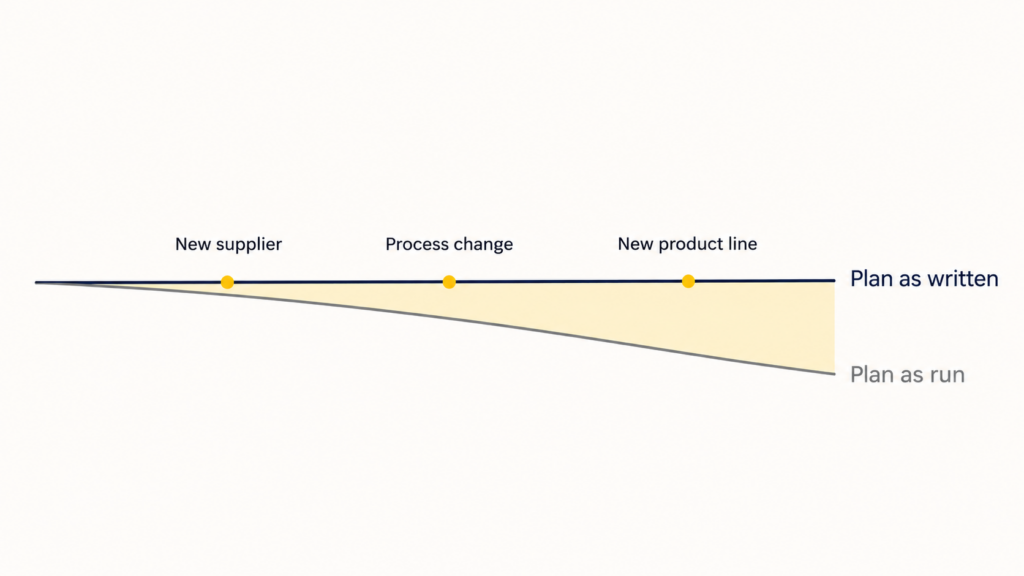
A paper or spreadsheet HACCP system rarely fails all at once. It drifts, in three ways.
- The records separate. Monitoring logs, verification checks, calibration records, training sign-offs and corrective actions each live somewhere different. Each is complete on its own, and none of them points to the others.
- The plan and the practice diverge. A process step changes, an ingredient supplier changes, a new product line is added. The plan document gets updated when someone remembers, not when the change happens.
- The links disappear. A deviation is written up and a corrective action is raised. The connection between the two exists only in the head of the person who handled it. When that person is on leave, the audit trail is a guess.
None of this is a failure of the food safety team. It is what happens to any system built from separate documents.
What HACCP software should hold
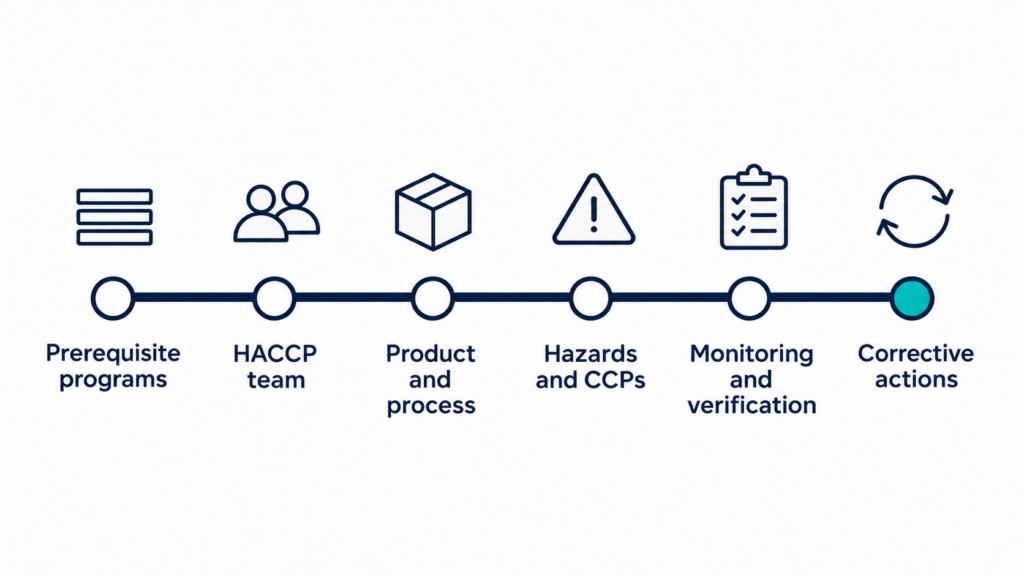
Good HACCP software is organized around the plan itself, not around a generic form. At a minimum it should give each of these a home.
Prerequisite programs. Cleaning, pest control, supplier approval, allergen management and the other foundations your HACCP plan depends on. These should be recorded once, centrally, and referenced from the plans that rely on them, rather than copied into each one.
The HACCP team. Who is on the team, internal and external, and their details kept connected to the plan they are responsible for. When the team changes, the plan’s record of who owns it should change with it.
Training and competence. A HACCP plan is only as good as the people running it. Software should link HACCP responsibilities to training records, so you can show that the people monitoring a CCP were trained to do it.
Product description and intended use. Ingredients, distribution method, intended use and intended consumers. This is the information that shapes your hazard analysis, so it belongs with the plan, not in a separate specification sheet.
Process flow. The flow diagram that outlines each step in the process, attached to the plan it describes.
The plan and its seven principles. Hazard analysis, critical control points, critical limits, monitoring procedures, corrective actions, verification procedures, and record-keeping, built and maintained in one place.
Monitoring and verification records. The day-to-day evidence that the plan is being followed, recorded against the plan rather than in a separate log.
Out-of-limit results and corrective actions. What happened, what was decided, what evidence supports it, and what follow-up was done.
The link that matters most
If you only take one thing from this article, take this. The most valuable thing HACCP software does is connect a finding to the action that follows it.
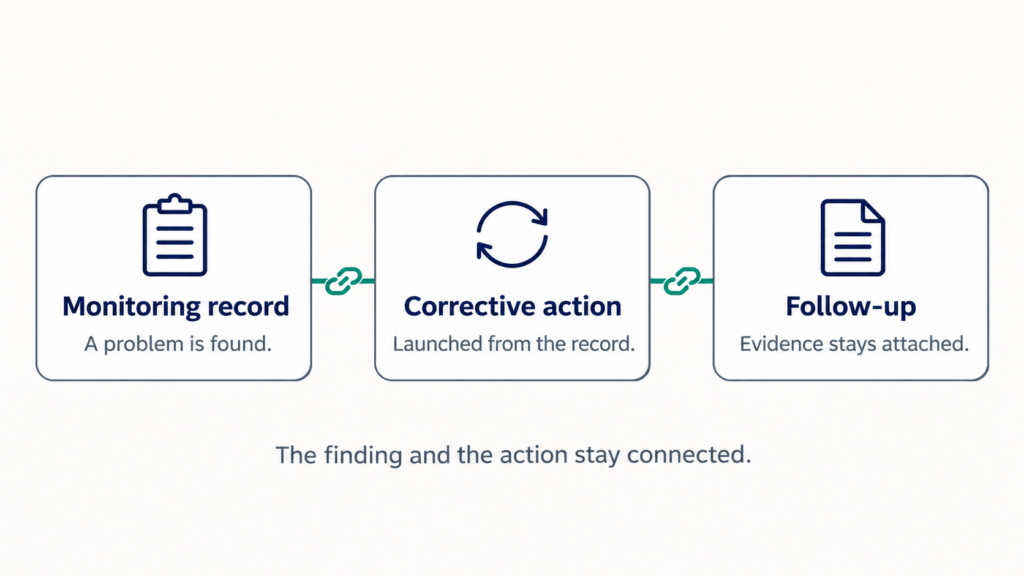
When monitoring or verification turns up a problem, the corrective action should be launched from that record, not re-keyed into a separate system by someone who remembered to do it. The result stays connected to the decision, the evidence and the follow-up. Months later, anyone can open the monitoring record and see exactly what was done about it.
A binder cannot do this, and a folder of spreadsheets can only approximate it. It is also the question auditors ask most often. In Trackmedium, the HACCP module connects food safety plans to training and corrective actions for exactly this reason.
What “audit-ready” actually means
“Audit-ready” gets used loosely, so here is what it should mean in practice:
- The records exist. Monitoring, verification and corrective action records are captured, not reconstructed.
- They are dated. You can see when each thing happened.
- They are attributable. You can see who did it and who approved it.
- They can be produced on request. When an auditor asks, the record and everything linked to it comes up in minutes, not after an afternoon of searching.
Software helps with all four by keeping monitoring results, verification findings, review records and revision history with the plan, each record showing who did the work, when, and what they found. What it cannot do is make the underlying food safety decisions for you. That brings us to the honest part.
What HACCP software will not do
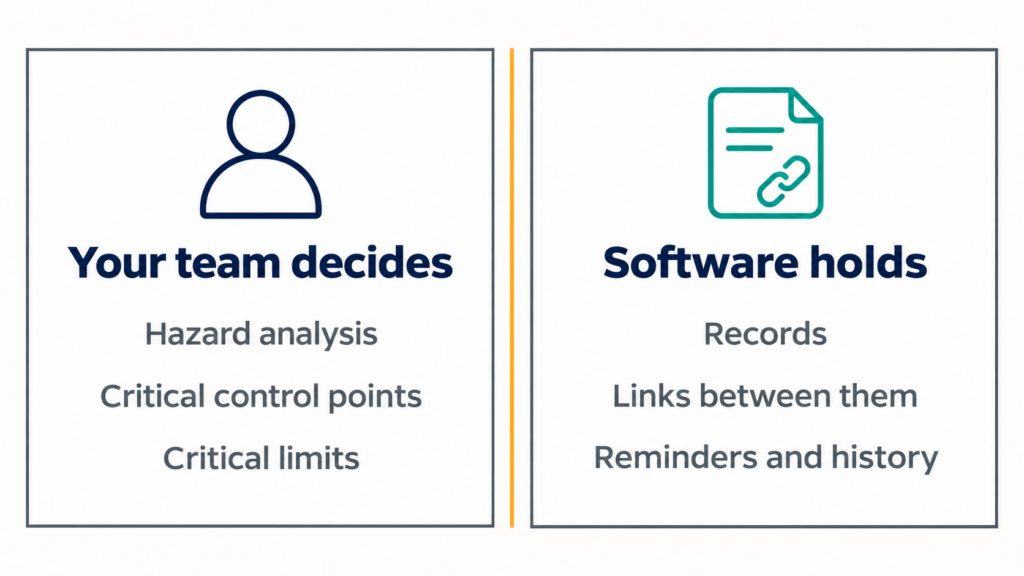
It is worth being clear about the limits, because some vendors are not.
- It will not write your HACCP plan. Software can guide your team through the seven principles and hold the result. The hazard analysis and the choice of critical control points need people who understand your product and your process.
- It will not decide your critical limits. Those come from your process, your science and your regulatory context.
- It will not make you compliant on its own. Compliance comes from your plan, your people and how consistently the plan is followed. Software supports that by keeping the evidence organized and connected.
A good system makes the right work easier to do and easier to prove. It does not replace the judgement of a trained food safety team.
Choosing HACCP software: questions to ask
When you are comparing options, these questions separate a HACCP-shaped system from a generic form builder:
- Can prerequisite programs be recorded once and referenced from several plans?
- Can a corrective action be launched directly from a monitoring or verification record?
- Are HACCP responsibilities linked to training and competency records?
- Does the system remind the people responsible when a monitoring or verification record is due?
- Can you review a published plan periodically and route changes or retirement for approval, with the revision history kept?
- Does each monitoring and verification record keep its link to the plan, the person who did the work, the date and time, and the result?
If you are running food and beverage quality more broadly, the same questions apply to the rest of your QMS. HACCP rarely lives alone; it connects to supplier approval, document control, training and corrective action.
Where to go from here
If your HACCP plan is sound but the records around it are scattered, the fix is not a new plan. It is a place where the plan, the evidence and the actions stay connected.
See how the Trackmedium HACCP module works, or request a demo to walk through it with your own plan.


